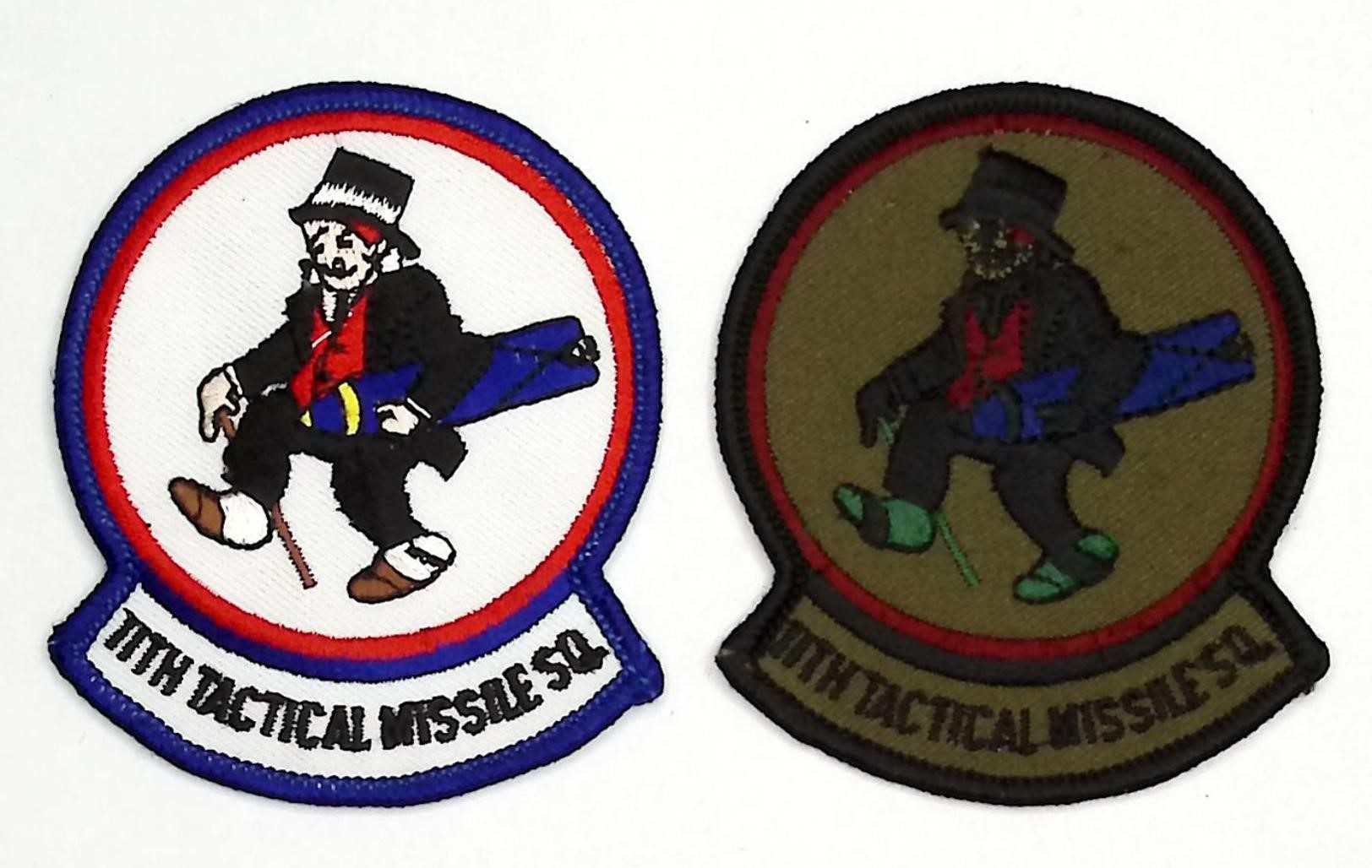
USAF Patch GLCM USAFE c 501 Tactical Missile Wing TMW u 11 TMS Tactical Missile Squadron RAF Greenham Common aa

$32.99

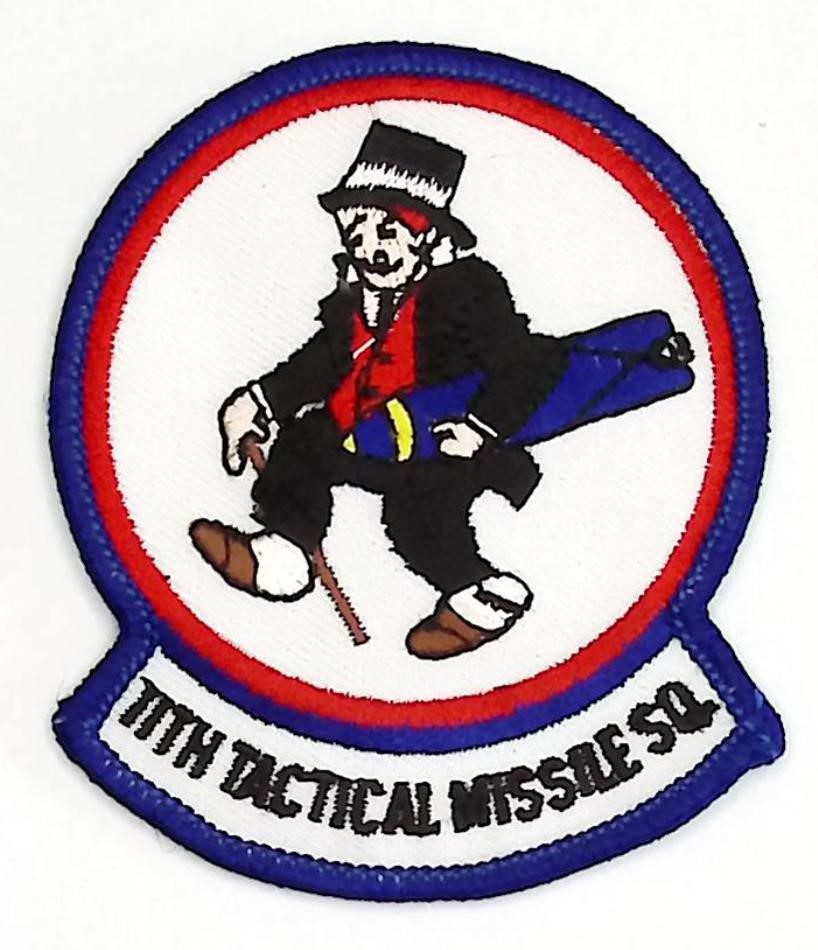
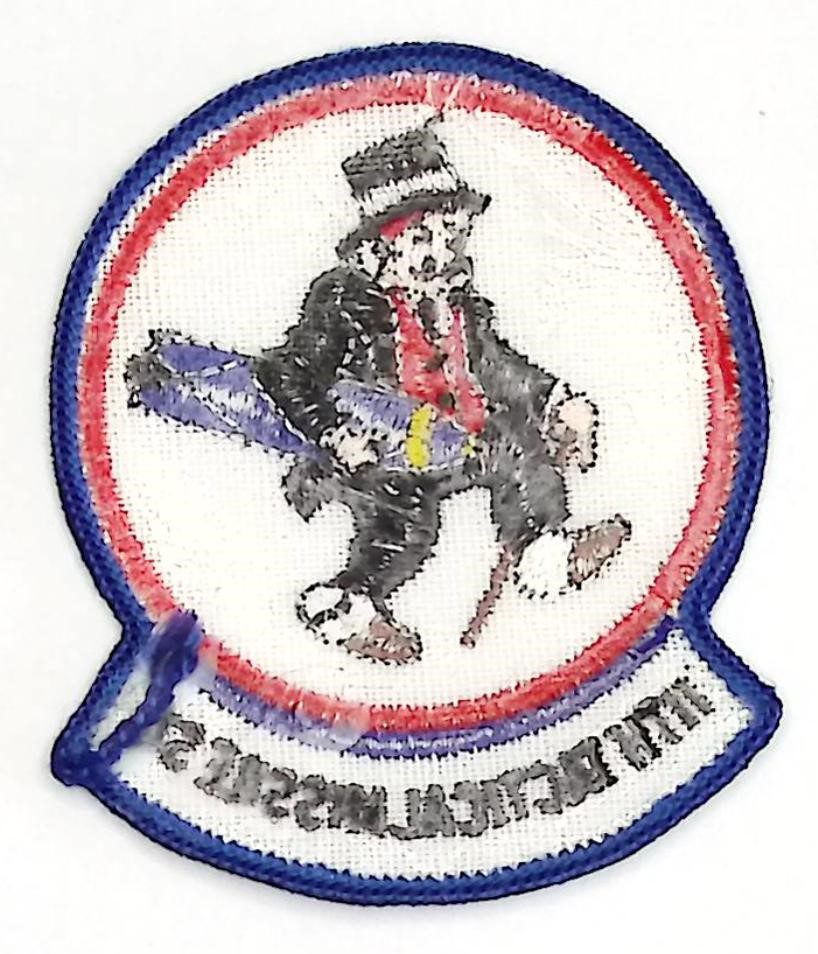
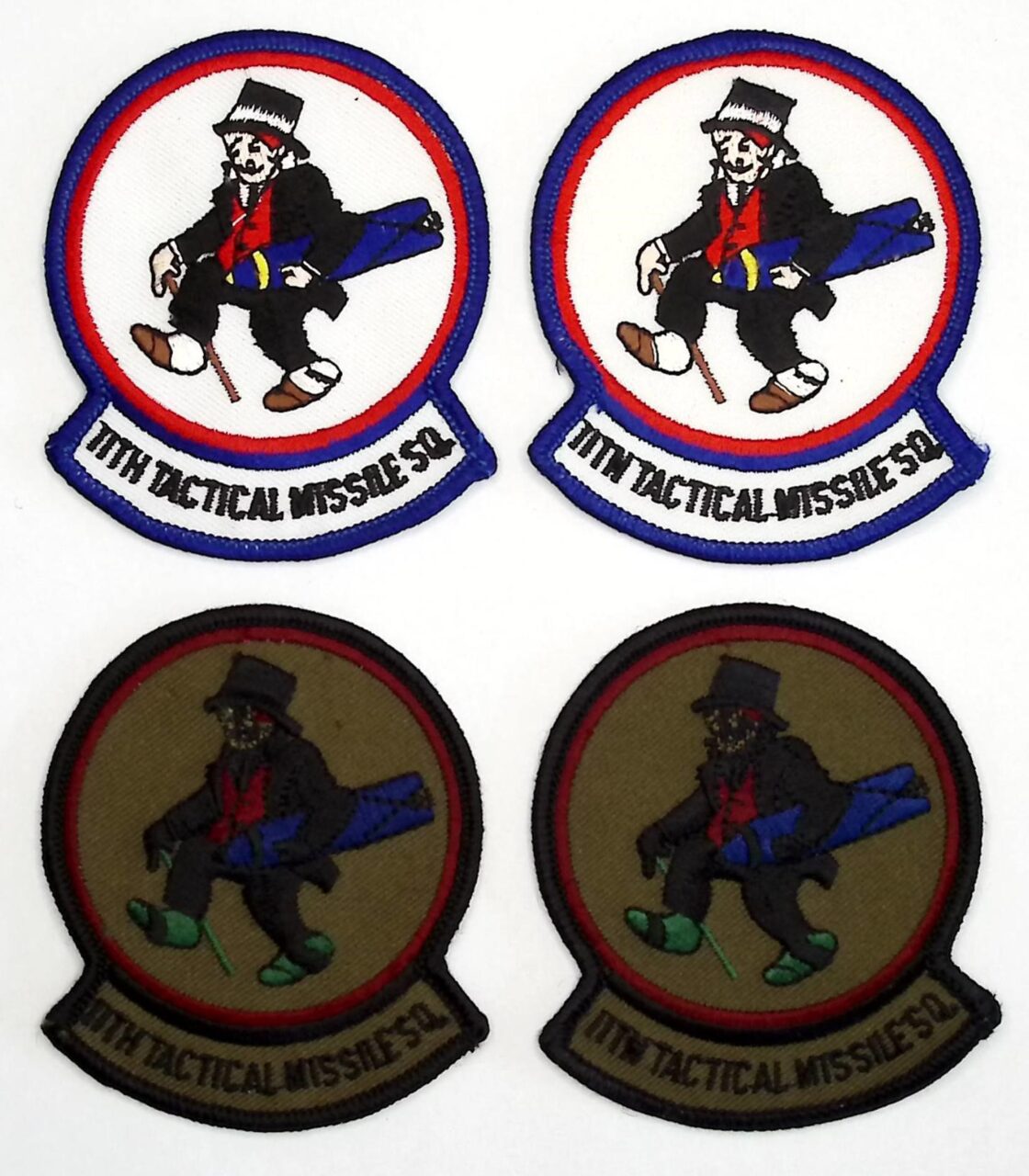
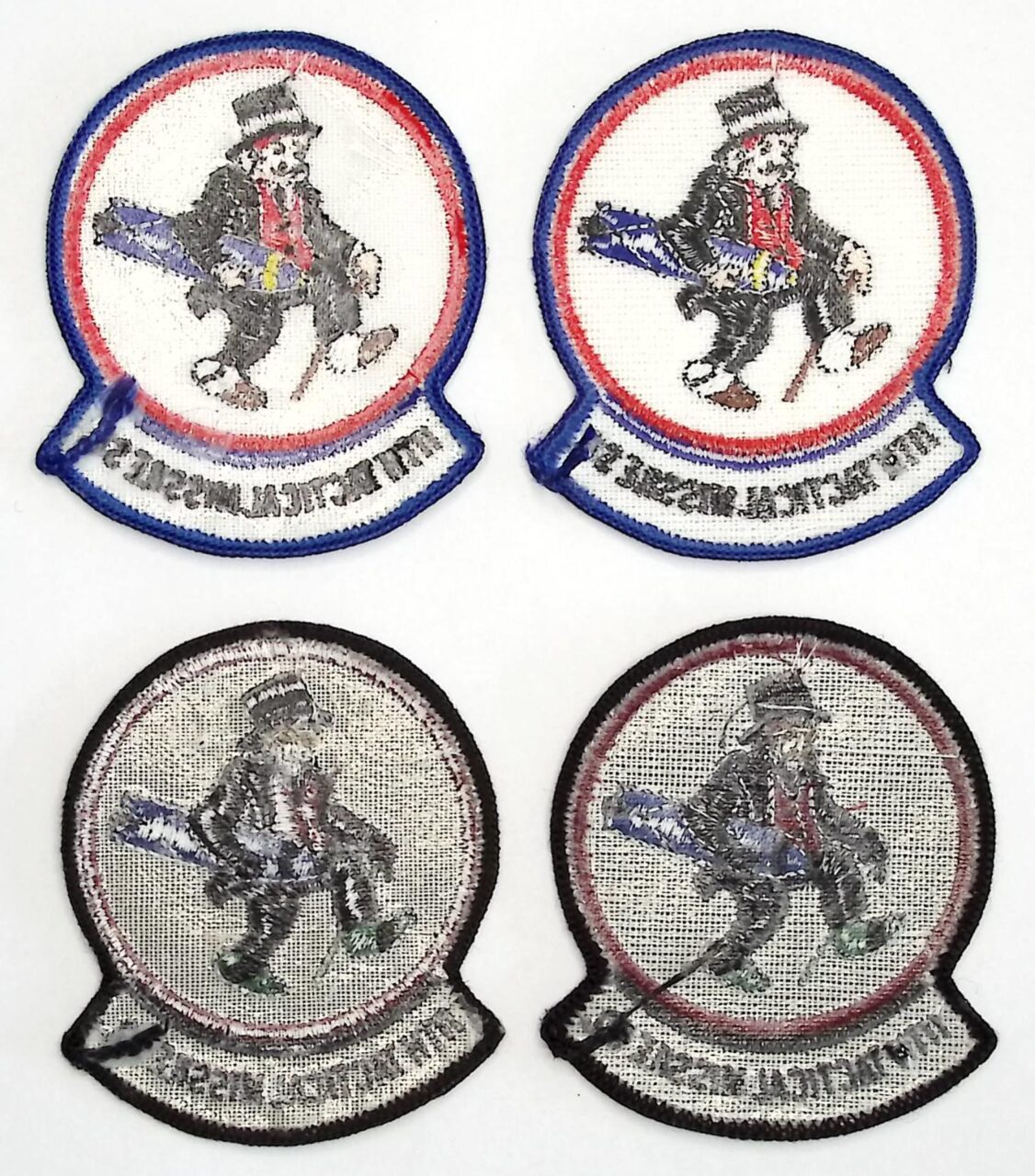
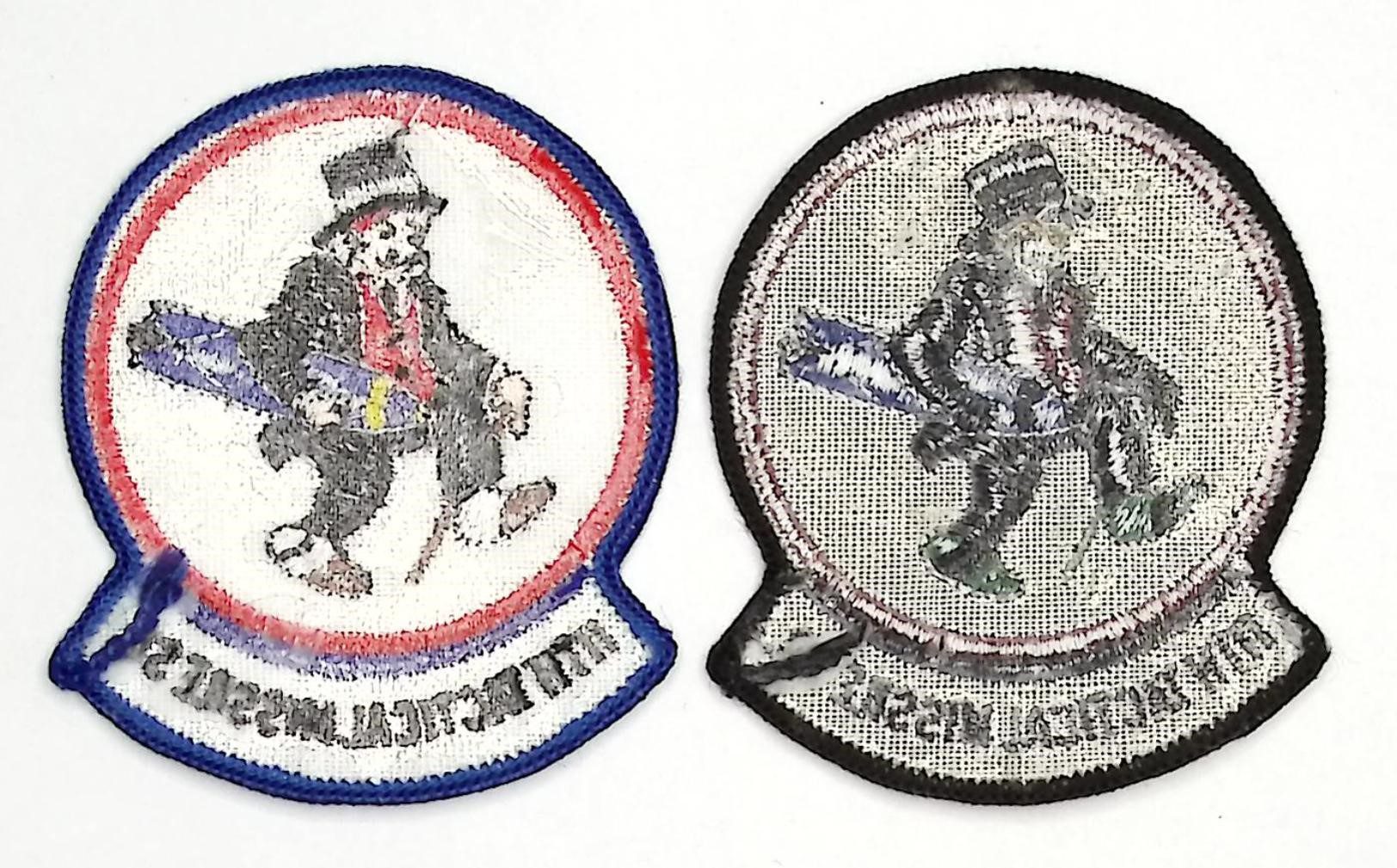
USAF 11 TMS Patch USAFE GLCM 11 TMS Tactical Missile Squadron Bright 1984 501 Tactical Missile Wing RAF Greenham Common UK embroidered on twill merrowed edge 77mm by 65mm three inches by two and one half inches. First batch with correct H on both colour and subdued patches. Free Shipping

1 in stock

USAF 11 TMS Patch Tactical Missile Squadron 501 Tactical Missile Wing USAFE GLCM

USAF 11 TMS Patch Tactical Missile Squadron 501 Tactical Missile Wing USAFE GLCM

First batch with correct H on both colour and subdued patches

Emblem – The Squadron adopted the emblem of cartoon character Jiggs carrying a bomb under his arm when it got to Maulan Aerodrome on 24 September 1918 applying it to its DH 4 bombers prior to its first mission on 26 September 1918. One of the pilots George McManus began drawing the very popular cartoon strip Bringing Up Father in 1913 whose main character was Jiggs and he designed the Squadron logo. The Squadron became known as the Jiggs Squadron

Base – RAF Greenham Common UK

Date – 1984

Visibility – Color

Construction – embroidered on twill merrowed edge

Size – 77mm by 65mm three inches by two and one half inches

Shipping – Free

USAF 11 TMS Patch

USAF 11 TMS Patch Tactical Missile Squadron 501 Tactical Missile Wing USAFE GLCM

History

WWI 11 Aero Squadron Curtiss JN 4 and Standard J 1 training aircraft followed by DH 4 bomber aircraft

One of the oldest USAF Squadrons 11 Aero Squadron Day Bombardment was activated as part of the United States Army Air Service at Kelly Field Texas on 26 June 1917 equipped with Curtiss JN 4 and Standard J 1 training aircraft. The Squadron left for the UK from New York on 17 December 1917 and began training under the Royal Flying Corps at several RFC Aerodrome to prepare for combat on the Western Front using a variety of French and British aircraft. While training the Squadron began instructing newly arrived US Army Air Service personnel and units before moving to Winchester on 7 August 1918 to pass its final RFC inspection.

11 Aero Squadron Day Bombardment crossed to France on 13 August 1918 moving to Delouze Aerodrome Lorraine Northeastern France on 26 August 1918. The Squadron picked up its first seven DH 4 bomber aircraft from 1 Air Depot at Colombey-les-Belles Airdrome on 1 September 1918 and began familiarization and combat training. The Squadron was assigned to 1 Day Bombardment Group on 10 September 1918. The Squadron relocated to Maulan Aerodrome  on 24 September and applied the newly adopted Jiggs emblem to their DH 4 bombers. One of the pilots George McManus began drawing the very popular cartoon strip Bringing Up Father in 1913 whose main character was Jiggs.

Combat operations commenced with a very successful high altitude 12,000 feet raid on Etain on 26 September 1918. Mainly high altitude missions continued in the First Army sector until Armistice on 11 November 1918. Over its six and a half weeks in combat the Squadron fought in the St. Mihiel offensive and the Meuse-Argonne offensive and undertook 32 raids engaged German fighter aircraft 17 times with 13 German aircraft destroyed while it lost 10 killed 1 MIA 1 Wounded and 8 taken prisoner.

11 Aero Squadron relocated from Maulan Airdrome to 1 Air Depot Colombey-les-Belles Airdrome on 17 January 1919 to hand over its equipment with its DH 4 bombers flown to Air Service Production Center No 2 at Romorantin Aerodrome with personnel moved to staging camps to await allotment of transport back to the US. The Squadron mustered at Bordeaux on 16 Apri 1919 and leaving France on 21 April 1919 arriving in New York on 30 April 1919. 11 AS moved to Camp Mills Long Island on 1 May 1919 where most of Squadron were demobilized.

Inter War DH 4 Curtiss B 2 Condor Keystone B 2 B 3 and B 4 Thomas-Morse O 19 Douglas B 18 Bolo and B 17 Flying Fortress bomber aircraft

11 Aero Squadron Day Bombardment HQ cadre relocated to Ellington Field Texas on 26 May 1919 reequipped with DH 4 bomber aircraft and new personnel tasked with patrolling the Mexican border assigned to the United States Army Border Air Patrol. The Squadron was reassigned to 1 Day Bombardment Group and moved to Kelly Field Texas on 8 November 1919 for bomber operations while remaining on call for border patrolling.

11 Aero Squadron Day Bombardment was redesignated 11 Squadron Bombardment on 14 March 1921 and relocated to Langley Field Virginia on 30 June 1922 utilizing old warships anchored off Chesapeake Bay for testing and demonstrating bombing of warships. The squadron was redesignated 11 Bombardment Squadron on 25 January 1923. 11 Bombardment Squadron was reassigned to the Air Corps Training Center and relocated to March Field California on 3 June 1927 and inactivated on 31 July 1927 with its personnel transferred to 54 School Squadron.

11 Bombardment Squadron was reactivated at Rockwell Field California on 1 June 1928 equipped with Douglas O 2 bobber aircraft assigned to the 7 Bombardment Group. The Squadron relocated to moved to March Field California on 29 October 1931 and reequipped with Curtiss B 2 Condor Keystone B 2 B 3 and B 4 and Thomas-Morse O 19 bomber aircraft. The Squadron won the USAAC Mackay Trophy in 1932 for its emergency food and supply drops to native Americans and miners cut off in in Arizona New Mexico and Utah during the harsh winter in early 1932.

The Squadron relocated to Hamilton Field California on 5 December 1934 and reequipped with Martin B 12 bomber aircraft. 11 BS reequipped with Douglas B 18 Bolo bomber aircraft in 1937 and a cadre of personnel were provided to 7 Bombardment Group to activate 22 Bombardment Squadron Heavy on 20 October 1939. 11 Bombardment Squadron reequipped with B 17 Flying Fortress bomber aircraft in 1939 and relocated to Fort Douglas Utah on 7 September 1940 adding patrol and rescue tasking to their role. In November 1941 7 Bombardment Group with 11 BS was ordered to the Philippines with ground units leaving on 21 November 1941 with air elements joining them once the ground units were ready. Before arrival in the Philippines the Japanese attacked Pearl Harbour on 7 December 1941 with attacked the Philippines shortly thereafter and the air element relocation to the Philippines was cancelled.

WWII B 17 Flying Fortress LB 30 Liberator B 25 Mitchell A 26 Invader bomber aircraft

11 Bombardment Squadron with its B 17 Flying Fortress bomber aircraft deployed to Muroc Army Air Field California on 8 December 1941 to undertake antisubmarine patrols along the coast. 7 Bombardment Group relocated to Hickam Field Hawaii on 18 December 1941 for anti submarine and anti shipping patrols and was relocated to Archerfield Airport Brisbane Australia and reassigned to US Navy Brisbane Australia on 22 December 1941. The Group and 11 BS deployed to Singosari Airfield Java Dutch East Indies on 13 January 1942 for bombing operations as the Japanese began their attacks moving to Jogjakarta Airfield Java on 19 January 1942. The Squadron established detachments on the Fiji Islands and Australia on 14 February 1942 before leaving Java on 1 March 1942 with the withdrawal of forces from the Dutch East Indies. The Squadron including the Fiji detachments already in Australia arrived at Essendon Airport Melbourne Australia on 4 March 1942. 11 Bombardment Squadron transferred its equipment and personnel to the 19 Bombardment Group on 6 April 1942.

11 Bombardment Squadron reestablished at Columbia Army Air Field South Carolina on 26 April 1942 assigned to 7 Bombardment Group as part of Third Air Force in preparation of deployment to the China India Burma theatre. An air element under Project 157 formed up at Morrison Field Florida in mid April 1942 with trained B 25 crews assigned a B 25 aircraft each. The aircraft were tested and equipped for combat and additional ground equipment and stores for the transfer to CBI. The B 25 aircraft set off on 2 May 1942 with most of the Project 157 crews arriving in Karachi at the end of May and were assigned to 11 Bombardment Squadron.A ground element of the Squadron sent to establish the base organization arrived at Karachi Airport India on 20 May 1942 proceeding to Allahabad Airfield India on 27 May 1942 and moving up to Kunming Airport China on 14 June 1942

In great secrecy the first B 25 aircraft moved up to Allahabad Airfield India leaving on 2 June 1942 for the Squadrons first mission taking its aircraft across the Hump into Southern China. Eight B 25 bombers arrived at Kunming Airport China by 10 June 1942 becoming the first United States Army Air Corps combat unit in China to join the American Volunteer Group AVG for combat missions operating under the China Air Task Force CATF.

The Squadron successfully attacked shipping in Hankow on 1 July 1942 with the American Volunteer Group fighters providing escort returning the next day to hit docks and storage buildings. The Squadron was redesignated 11 Bombardment Squadron Medium and reassigned from 7 Bombardment Group to 341 Bombardment Group on 15 September 1942 but remained attached to China Air Task Force for orders.

China Air Task Force CATF was inactivated on 19 March 1943 with its units being assigned to the Fourteenth Air Force Flying Tigers activated on the same day. The Squadron continued attacks against Japanese shipping harbors railways and bridges in French Indochina Canton Hong Kong and South China Sea detaching to other airfields where necessary. The Squadron sent several selected crews to India to commence training on the A 26 Invader bomber in July 1945. They were returning across China when the Japanese surrendered on 15 August 1945 and never saw combat with the Squadron. The Squadrons A 26 Invaders took part in three missions to drop leaflets announcing the end of the war.

11 BS relocated back across the Hump to India where the A 26 Invader crews were ordered to ferry their aircraft to Germany while the rest of the Squadron embarked to return to the United States by sea.  The Squadron arrived in Newark New Jersey on 1 November 1945 and then inactivated on 2 November 1945 at Camp Limer NJ.

Cold War 11 Pilotless Bomber Squadron B 61 Matador tactical missile

11 Pilotless Bomber Squadron was activated at Orlando AFB Florida on 1 September 1954 equipped with Martin B 61 Matador tactical nuclear cruise missiles assigned to Ninth Air Force. The Squadron was redesignated the 11 Tactical Missile Squadron on 8 June 1955. 11 TMS relocated to Hahn AB West Germany on 1 July 1956 assigned to United States Air Forces in Europe and attached to 7382 Guided Missile Group Tactical. 11 Tactical Missile Squadron was reassigned to the 587 Tactical Missile Group when it replaced 7382 Guided Missile Group Tactical on 15 September 1956. 11 TMS was inactivated on 18 June 1958.

Cold War 11 Tactical Missile Squadron BGM 109G Ground Launched Cruise Missile Nuclear

To counteract the threat of the Soviet SS 20 mobile tactical nuclear missiles deployed in the Soviet Block from 1975 the USAF introduced BGM 109G Gryphon nuclear warhead cruise missile to be based in Europe. With plans to allocate RAF Greenham Common as one of the UK bases the USAF approved the consolidation of 11 Bombardment Squadron with 11 Tactical Missile Squadron and redesignation of the consolidated unit to 11 Tactical Missile Squadron on 11 January 1982 to retain historic lineage of USAF units in recognition unit roles during WWII.

11 Tactical Missile Squadron was activated 1 October 1982 at RAF Greenham Common as the missile squadron of 501 Tactical Missile Wing and received its first BGM 109G Ground Launched Cruise Missile GLCM in November 1983.

11 MS had 96 missiles held by six flights A B C D E and F each having 2 Launch Control Vehicles and 4 Transporter Erector Launchers with four missiles each providing 16 missiles per flight. Support was provided by 501 Tactical Missile Maintenance Squadron. During periods of increased tension the flights would be deployed with additional security and support vehicles to one of a number of pre-surveyed classified locations in the countryside away from the base. The flight would dig in erect camouflage to hide the vehicles set up special intrusion detection radar and prepare for launch.

The Reykjavík summit in Iceland on 11 October 1986 between US President Ronald Reagan and Soviet General Secretary Mikhail Gorbachev agreed in principle to removing Intermediate Range Nuclear Force systems from Europe and to equal global limits of 100 INF missile warheads. The Intermediate-Range Nuclear Forces Treaty was signed on 8 December 1987 coming into force on 1 June 1988 leading to the removal of all nuclear missiles from Western Europe.

11 TMS was the last missile Squadron to be inactivated on 31 May 1991 following the decommissioning of the BGM-109G.

11 Bomb Squadron B 52H Stratofortress bomber

11 Bomb Squadron was activated at Barksdale AFB Louisiana on 1 July 1994 equipped with B 52H Stratofortress bomber aircraft assigned to 2 Operations Group under Air Combat Command. The Squadron is tasked with providing B 52 heavy bomber combat crews for front line Squadrons. 11 BS undertakes advanced training for nuclear deterrence and global operations. The Squadron takes part in exercises and deployments to regional hubs like RAF Fairford UK and Morón Air Base Spain for Bomber Task Force Europe in support of NATO. 11 BS was moved from Air Combat Command to Global Strike Command in 2010.


This USAF 11 TMS Patch dates from 1984

USAF 11 TMS Patch