
Your cart
Sub-Total: $0.00

$99.99
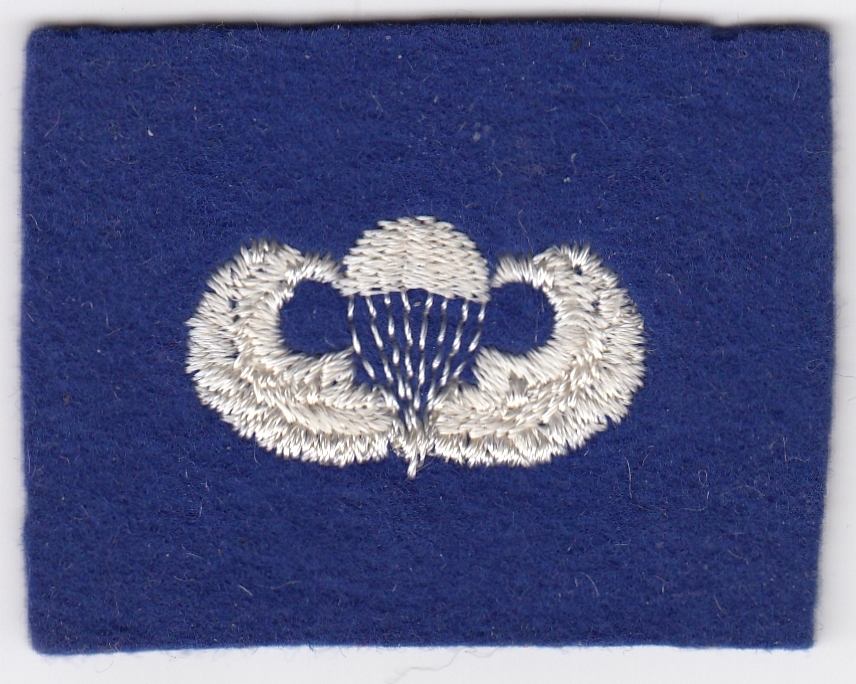
British Made Embroidered on wool 52mm by 69mm two inches by two and three quarter inches
Free Shipping
US Army 502nd Airborne Infantry Regiment Patch – WWII 1944
This original US Army 502nd Airborne Infantry Regiment patch dates from 1944 and is a British-made example, embroidered on wool. The patch represents one of the most recognised airborne units of the Second World War, forming part of the famous 101st Airborne Division.
Specification:
The development of US airborne forces began in response to early German airborne operations during the Second World War. Although the heavy casualties suffered by German paratroopers during the invasion of Crete in 1941 were not fully understood at the time, the operation demonstrated the strategic potential of airborne assault.
As a result, the United States accelerated the creation of airborne units.
The 502nd Parachute Infantry Battalion was established on 1 July 1941 at Fort Benning, formed from elements of the 501st Parachute Infantry Regiment and initially commanded by Major George P. Howell Jr.
Following the attack on Pearl Harbor in December 1941, airborne forces expanded rapidly. On 2 March 1942, the 502nd Parachute Infantry Regiment (PIR) was officially formed, with Colonel George Van Horn Moseley Jr. assuming command.
In July 1942, the US Army established the 82nd and 101st Airborne Divisions, with the 502nd assigned to the 101st.
The regiment relocated to Fort Bragg, where it underwent intensive training throughout 1942–1943. This included large-scale exercises, manoeuvres, and airborne operations designed to prepare the unit for combat deployment.
In September 1943, the 502nd PIR deployed to England in preparation for operations in Europe. After a delayed Atlantic crossing, the regiment arrived in Liverpool and was stationed in Berkshire, around Chilton Foliat and Denford near Hungerford.
During its time in England, the regiment:
The unit also adopted its identifying code “Kickoff”, which it retained throughout the war.
In early 1944, the regiment moved to southern England and was placed under strict operational security. Troops were isolated, equipped, and briefed for the upcoming invasion of Normandy.
The mission of the 502nd PIR during D-Day (6 June 1944) included:
These objectives were critical in supporting the success of the Allied invasion.
Patches from the 502nd Airborne Infantry Regiment are highly sought after due to:
Original WWII examples, particularly British-made wool patches, are especially desirable among collectors.
Free Shipping
Explore our World War II patches
This patch dates from 1944.