Your cart
Sub-Total: $0.00
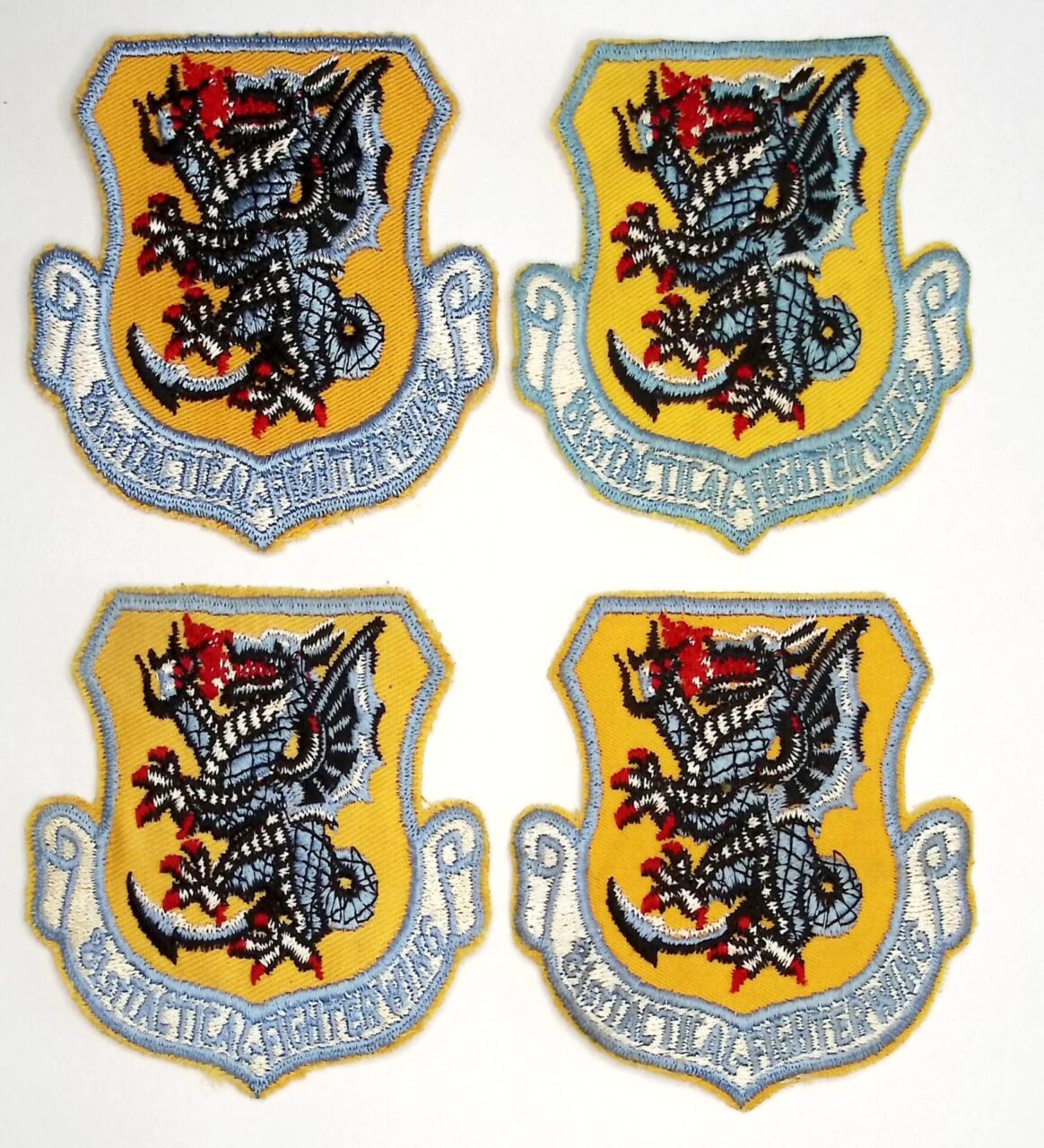
Review the Collection of 81st TFW Patches
and under the 81st TFW the Tactical Fighter Squadrons:
Review the Collection of 78th TFS Patches
Review the Collection of 510th TFS Patches
The 81st Tactical Fighter Wing was one of the most important frontline fighter wings assigned to United States Air Forces in Europe during the Cold War. Based primarily at RAF Bentwaters and RAF Woodbridge in eastern England, the Wing played a major role in NATO air defence, tactical strike operations and rapid-response combat readiness from the early 1950s until the end of the Cold War.
The Wing became closely associated with American air power in the United Kingdom and operated some of the United States Air Force’s most famous combat aircraft, including the F-84 Thunderjet, F-86 Sabre, F-101 Voodoo, F-4 Phantom II and A-10 Thunderbolt II. Throughout its history the 81st TFW maintained a constant state of operational readiness, supporting NATO exercises, tactical deployments and Cold War deterrence operations across Europe and beyond.
The 81st Fighter Wing originated during the post-war expansion of USAFE as the United States strengthened NATO air defences in Europe. The Wing moved to RAF Bentwaters in the early 1950s and soon became one of the principal tactical fighter organisations in the United Kingdom.
Initially equipped with Republic F-84 Thunderjet aircraft, the Wing later transitioned to North American F-86 Sabres before introducing more advanced fighter aircraft during the Cold War escalation of the late 1950s and 1960s. RAF Bentwaters and nearby RAF Woodbridge became major USAF installations supporting both conventional and tactical nuclear operations within NATO planning.
The Wing regularly participated in operational readiness inspections, NATO tactical evaluations and large-scale exercises throughout Western Europe. Deployments frequently involved bases in Germany, Italy, Spain, Turkey and other NATO countries.
During the 1960s the 81st Tactical Fighter Wing operated McDonnell F-101 Voodoo aircraft before transitioning to the F-4 Phantom II. The Phantom became one of the Wing’s most recognised aircraft and significantly strengthened USAFE tactical strike capability in Europe.
The F-101 period was arguably the most significant period in 81st TFW history.
Unlike the earlier F-84F mission, the Voodoo transformed the Wing into a frontline NATO nuclear strike force.
The aircraft carried:
using:
The tactic involved:
The mission profile was often regarded as effectively a one-way strike mission, as the aircraft's range offered little chance of returning from deep Warsaw Pact targets.
The 81st TFW became one of NATO's principal tactical nuclear strike wings in Europe.
The 91st, 92nd and 93rd Tactical Fighter Squadrons formed the core combat squadrons of the Wing during this period. The F-4D Phantom II aircraft operated from RAF Bentwaters became a familiar sight across NATO exercises and deployments throughout the Cold War.
The Wing maintained a dual mission capability, combining conventional tactical operations with NATO nuclear strike responsibilities. RAF Bentwaters and RAF Woodbridge therefore became strategically important air bases during periods of heightened East-West tension.
One of the most famous periods in the Wing’s history began in the late 1970s when the 81st TFW converted to the Fairchild Republic A-10 Thunderbolt II. The arrival of the A-10 transformed RAF Bentwaters and RAF Woodbridge into major NATO close air support bases.
The A-10, often known as the “Warthog,” was specifically designed for battlefield support and anti-armour operations against Warsaw Pact forces. Operating close to the front lines, the aircraft became highly respected for its survivability, heavy cannon armament and ability to operate from dispersed airfields.
During this era the 81st Tactical Fighter Wing became one of the best-known USAFE units in Europe. The Wing regularly deployed throughout NATO and participated in constant readiness exercises designed to counter potential Soviet aggression.
Following Iraq’s invasion of Kuwait in 1990, aircraft and personnel from the 81st Tactical Fighter Wing deployed to the Middle East in support of Operation Desert Shield and Operation Desert Storm.
A-10 aircraft from RAF Bentwaters flew combat operations against Iraqi armoured forces and battlefield targets during the Gulf War. The aircraft proved highly effective in the close air support role and became internationally recognised during the conflict.
The success of the A-10 during Desert Storm reinforced the reputation of the 81st TFW and USAFE tactical aviation units during the final years of the Cold War period.
With the collapse of the Soviet Union and the reduction of NATO forces in Europe, RAF Bentwaters and RAF Woodbridge were selected for closure during the early 1990s. The 81st Tactical Fighter Wing was redesignated the 81st Fighter Wing before eventual inactivation in 1993.
Today the Wing remains highly regarded among USAFE historians, Cold War researchers and military aviation collectors. Patches, squadron insignia, deployment items and memorabilia connected to the 81st Tactical Fighter Wing are particularly collectible due to their connection with RAF Bentwaters, RAF Woodbridge, NATO operations and the famous A-10 Thunderbolt II era.
The history of the 81st TFW represents an important chapter in Cold War aviation history and the long-standing military partnership between the United States and the United Kingdom.